On October 20, a delegation led by OH Kyun, President of The Seoul Institute, visited Shanghai Administration Institute (SAI). Tu Ye, Vice President of SAI, met with the delegation. Relevant officials from Department of Public Administration, Department of Sociology, and Foreign AffairsOffice attended the meeting.
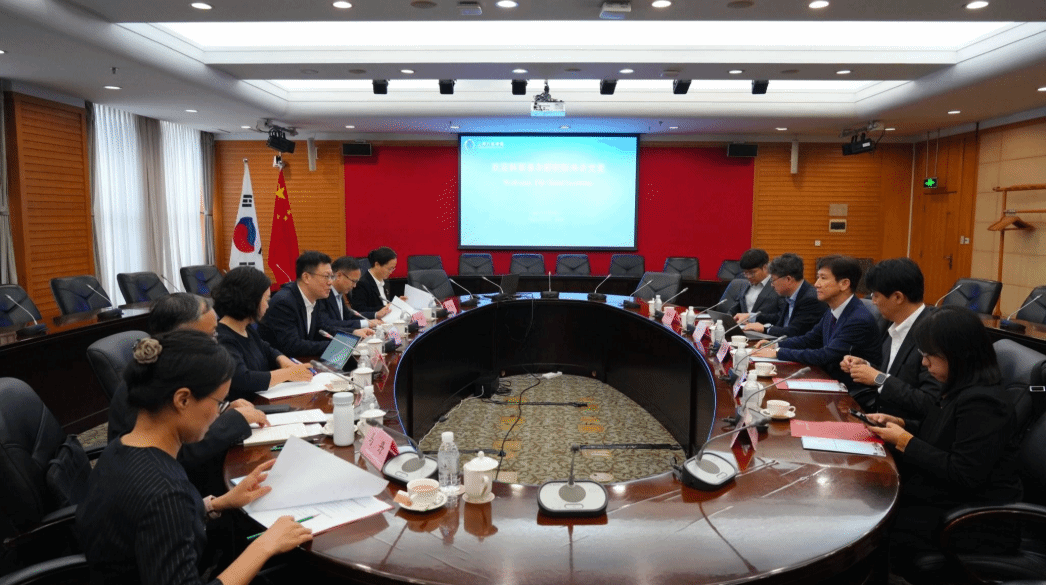
Tu Ye introducedSAI’s educational system, teaching and research activities, policy consulting work, and international cooperation. He also reviewed the long-standing history of friendly exchanges between the two institutions.
He noted that China and South Korea are both strategic cooperative partners and friendly neighbors. Seoul and Shanghai, as major cities in their respective countries, maintain close exchanges and enjoy a solid foundation for cooperation. As important professional institutions, both organizations have played an active role in promoting the development of their respective cities and improving people's well-being. He expressed the hope that the visit would serve as an opportunity to enhance mutual understanding and lay a solid foundation for future cooperation.
Oh Kyun introduced Seoul Institute’s history and development, institutional mandate, organizational structure, and research areas, with particular emphasis on its innovative initiatives in relevant fields. He noted that the two institutions share similar missions in civil servant training and policy research and advisory services, offering considerable scope for cooperation. He expressed the hope that both sides would deepen practical cooperation in personnel exchanges, joint research, academic conferences, and other areas, thereby generating more tangible outcomes.
Professor Dong Youhong, Director of Department of Public Administration, and Professor He Haibing, Director of Department of Sociology, respectively introduced their departments’ research areas. The participants then exchanged views in depth on topics including the application of artificial intelligence to urban governance, institutional safeguards and ethical oversight for AI development, big data applications and security management, social welfare provision, and elderly care services.
The two sides also discussed smart campus development, faculty development, and international cooperation, among other topics. They reached a consensus on cooperation, helping to chart a course for further collaboration in the next stage.





 Shanghai public network filing 3101042008844.
