On March 11, a Lancang–Mekong regional delegation organized by Thailand’s Ministry of Industry visited Shanghai Administration Institute(SAI). The delegation consisted of government officials, scholars, representatives of industry associations, and business leaders from Mekong River countries including Thailand, Vietnam, and Laos. The meeting was chaired by Vice President Wang Yongjie.
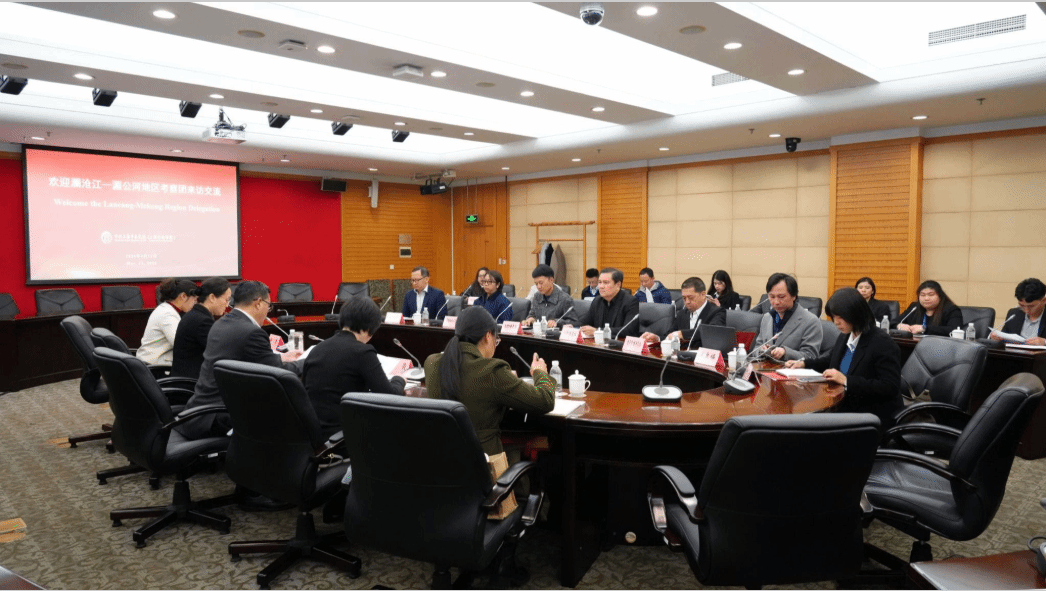
Wang Yongjie extended a warm welcome to the delegation. He introduced the general overview of the SAI and reviewed its cooperation with relevant institutions in Thailand, Vietnam, and Laos. He also highlighted SAI’s integrated approach of teaching, research, and policy consultation, as well as its international exchange programs. He noted that the Lancang–Mekong Cooperation (LMC) is a new type of sub-regional cooperation mechanism jointly initiated and developed by China together with Cambodia, Laos, Myanmar, Thailand, and Vietnam. Since its establishment, the mechanism has made positive contributions to strengthening good-neighborly relations and pragmatic cooperation among the six countries. SAI is willing to actively promote cooperation in relevant fields under this framework and to use this exchange as an opportunity to enhance mutual learning and exchange of experiences.
The delegation expressed gratitude for the warm reception by SAI and also thanked it for previously sending faculty members to Thailand to deliver lectures for the International Industrial Cooperation Zones Training Program for Mekong Countries. Members of the delegation spoke highly of the SAI’s contributions to think tank development in support of the Party and the country, as well as the development of Shanghai. They noted that this exchange has provided valuable Chinese experience that could serve as a reference for their own countries as they explore sustainable development paths suited to their national conditions. They expressed hope that, under the Lancang–Mekong Cooperation framework, deeper cooperation in policy consultation and training programs could be carried out in the future.
During the meeting, Zhou Jing, Associate Research Fellow and Deputy Director of Shanghai Development Research Center, delivered a thematic presentation based on the 2025 Government Work Report of the State Council and the Outline of the 15th Five-Year Plan for National Economic and Social Development of Shanghai. She introduced Shanghai’s policies, practices, and future prospects in accelerating the cultivation and development of new quality productive forces. The two sides also engaged in in-depth discussions on topics such as talent cultivation, talent recruitment, and decision-making mechanisms.


 Shanghai public network filing 3101042008844.