From March 27 to 28, the Online Forum on Promoting the Sustainable Development of Cities jointly sponsored by the Civil Service College of Singapore, Shanghai Administration Institute and Singapore Temasek Foundation was successfully held in the combination of online and offline methods. The forum language includes Chinese and English with simultaneous interpretation services. The purpose is to build a common platform for China and Singapore to learn from each other, draw on each other’s advantages and jointly promote the green and sustainable development of cities. More than 100 experts and scholars from the Civil Service College of Singapore, Ministry of Sustainability and Environment of Singapore, Shanghai Administration Institute, etc. gathered online to conduct in-depth academic exchanges on topics such as sustainable development and governance, development of smart cities, carbon neutrality, waste management and innovative sustainable solutions.
Professor ZENG Jun, Vice President of Shanghai Administration Institute, pointed out in his speech that how to build a green, sustainable and livable city is an issue that every city needs to face. The forum is a cross-border, cross-regional, and cross-cultural event. It has provided a cultural platform for equal dialogues, exchanges and mutual learning between China and Singapore and will surely enhance the friendship between the two countries while promoting cultural exchanges. In his speech, Mr. XIE Qinghua, Assistant Director of the Dean of Civil Service College of Singapore, pointed out that as the world pays more attention to green topics such as climate change, China and Singapore have actively proposed relevant plans and policies to vigorously boost and achieve sustainable development. With a novel form and diverse themes, the forum provides not only excellent opportunities for experts and scholars from China and Singapore to have in-depth communication but also a good platform for the two sides to strengthen cooperation and exchanges.
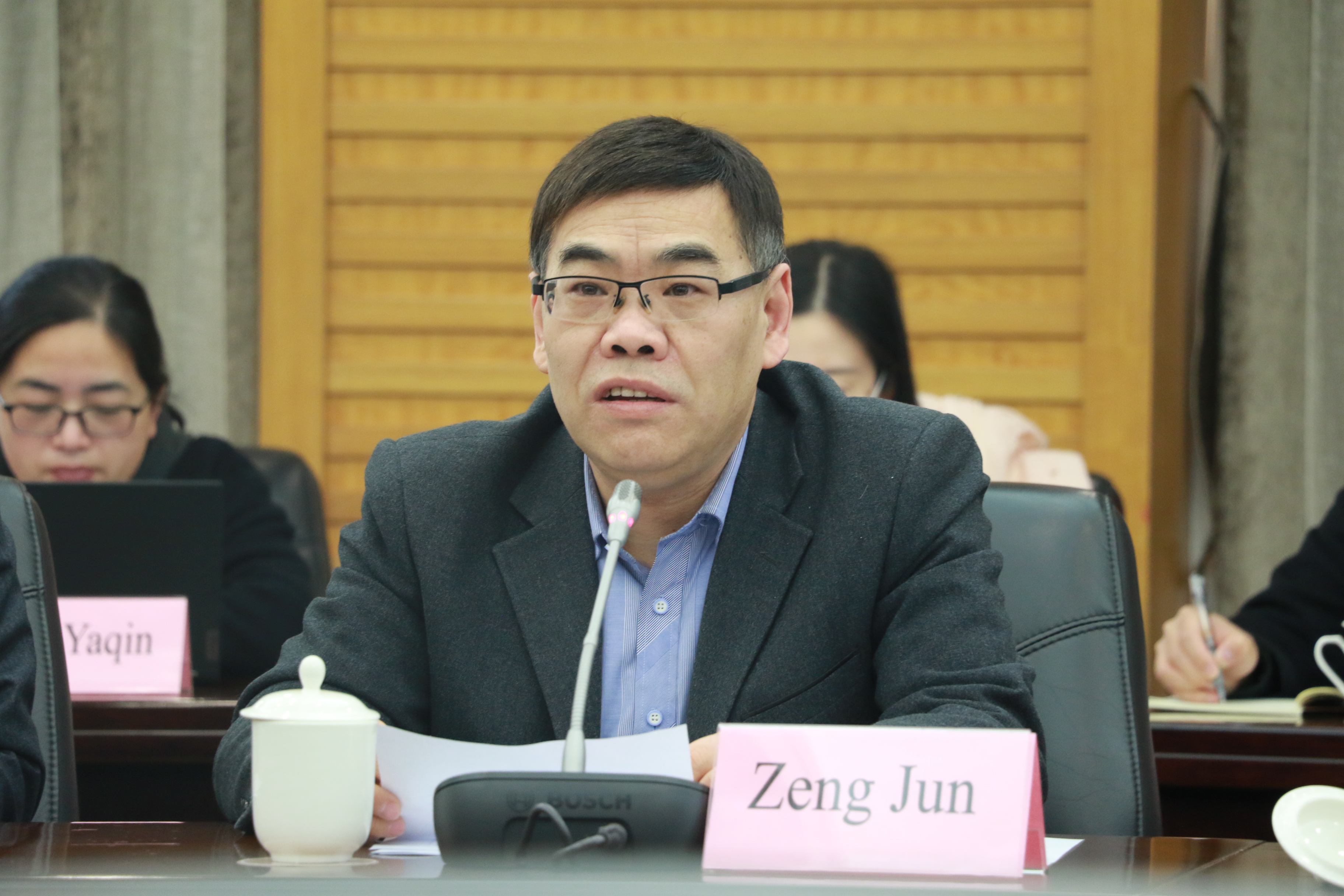
The forum was held in the form of thematic reports in two sessions. The first session was presided over by LIN Zhijia, Research Fellow of Civil Service College of Singapore. Professor WANG Caiqiang, Deputy Dean of the College of Design and Engineering at National University of Singapore, Professor TANG Aijun, Party School of the Central Committee of CPC, Dr. NIAN Jialiang, Co-founder and CEO of Center for Strategic Energy and Resources (CSER) in Singapore, and Dr. WANG Ting, Lecturer of the Department of Philosophy at Shanghai Administration Institute delivered keynote Speeches.
In his speech, Professor WANG Caiqiang showed the relevant research carried out by National University of Singapore on future cities and pointed out that the sustainable growth of cities is not a blind pursuit of economic growth but a dynamic balance between economic growth and social system development, and between resource utilization and environmental protection. Professor TANG Aijun focused on the spirit of the 20th CPC National Congress. He began with Chinese modernization and discussed the characteristics of Chinese modernization and the issue of harmonious coexistence between man and nature that occurred in the modernization process. He proposed that ecological civilization is fundamentally about the transformation of production mode and lifestyle. To realize the harmonious coexistence between man and nature, transforming the old production mode is the key to sustainable development. Dr. NIAN Jialiang made a speech on urban sustainable development. Focusing on policies and governance of urban development, he discussed the three bottom lines of sustainable development (human, the earth, and profit) and took the CSER as a typical case to introduce strategic choices related to urban development in Singapore. Dr. WANG Ting took the practice of “Government Online-Offline Shanghai” and “unified management via one network” as an example, discussed Shanghai’s successful experience in digital government construction and demonstrated the important role played by digital government in promoting energy saving and carbon emissions reduction by reducing administrative energy consumption, integrating resources and improving governance efficiency.
The second session of the forum was presided over by Professor CHEN Shengyun, Director of the Department of Philosophy of Shanghai Administration Institute. ZHANG Xiaomao, Deputy Director of the Shanghai Administration of Governmental Affairs, Ranjeet, Senior Deputy Director of the International Relations Department of the Ministry of Sustainability and Environment of Singapore, Dr. TANG Qingzhou, Lecturer of the Department of Philosophy of Shanghai Administration Institute, and Dr. TANG Yanhua, Associate Professor of National University of Singapore, gave keynote speeches.
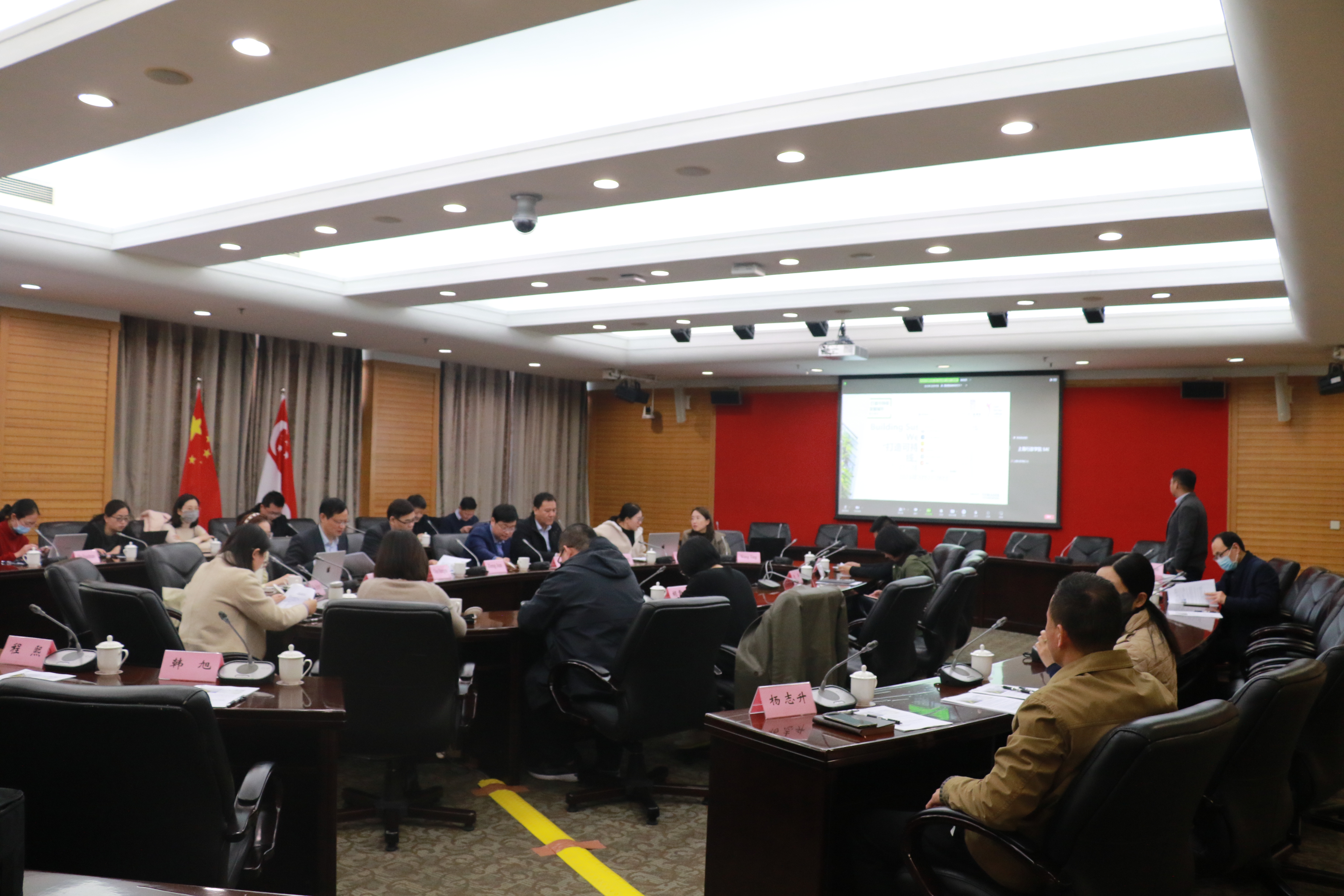
Focusing on the green development of public institutions in the “three provinces and one city” in the Yangtze River Delta, Deputy Director ZHANG Xiaomao provided an in-depth interpretation and elaboration of practices and innovations of public institutions in the Yangtze River Delta in green development based on specific efforts. Senior Deputy Director Ranjeet introduced the “Singapore Green Plan 2030” and detailed important measures taken by public organizations in Singapore to lead and pursue sustainable development. Dr. TANG Qingzhou discussed Shanghai’s successful experience in promoting waste sorting from the three aspects of system building, social mobilization and cultural support, and showed the Shanghai model as a result of efforts in various aspects such as government legislation, media dissemination, and public participation since 2019, as well as Shanghai’s transformation from a city besieged by waste to a charming city. Dr. TANG Yanhua introduced Singapore’s E2S2-CREATE program (energy and environmental sustainability solutions for megacities), detailed the research progress of the program in waste management and new pollutants, and described its important role in helping solve urban governance problems in China and Singapore.
During discussion sessions, experts and scholars from China and Singapore had friendly and heated discussions on issues related to urban sustainable development and reached many consensuses. In the concluding speech, Professor CHEN Shengyun summarized that the two sides had not only exchanged views on the current situation and advanced experience of building sustainable cities but also discussed the theory of modernization and shared opinions on the direction of urban development in the future. Scholars at the forum discussed and analyzed the building of sustainable cities from different research perspectives and proposed a new pattern of further exchanges and cooperation between China and Singapore in the collision of ideas. CAI Xinying, Assistant Director of the East Asia Division of the International Department of Civil Service College of Singapore, believed that the forum had deepened mutual understanding between China and Singapore. The governments of the two sides are both committed to promoting sustainable development of cities through relevant plans, policies, and governance. It is hoped that Chinese and Singaporean scholars will gather in Singapore for face-to-face in-depth exchanges in the near future.


 Shanghai public network filing 3101042008844.