On the afternoons of July 6th and 7th, the Sino-German Dual Circulation Strategy International Seminar was held at SAI. More than 30 experts and scholars from the Shanghai Office of Germany Trade & Invest (GTAI), the University of Duisburg-Essen, the Berlin School of Economics and Law, Peking University, and SAI participated in the online seminar. Vice President of SAI MEI Lihong and Chief Representative of the Shanghai Office of Friedrich-Ebert-Stiftung René Bormann delivered opening speeches. Director of SAIs Department of Economics and Management Professor TANG Juelan made a closing summary.
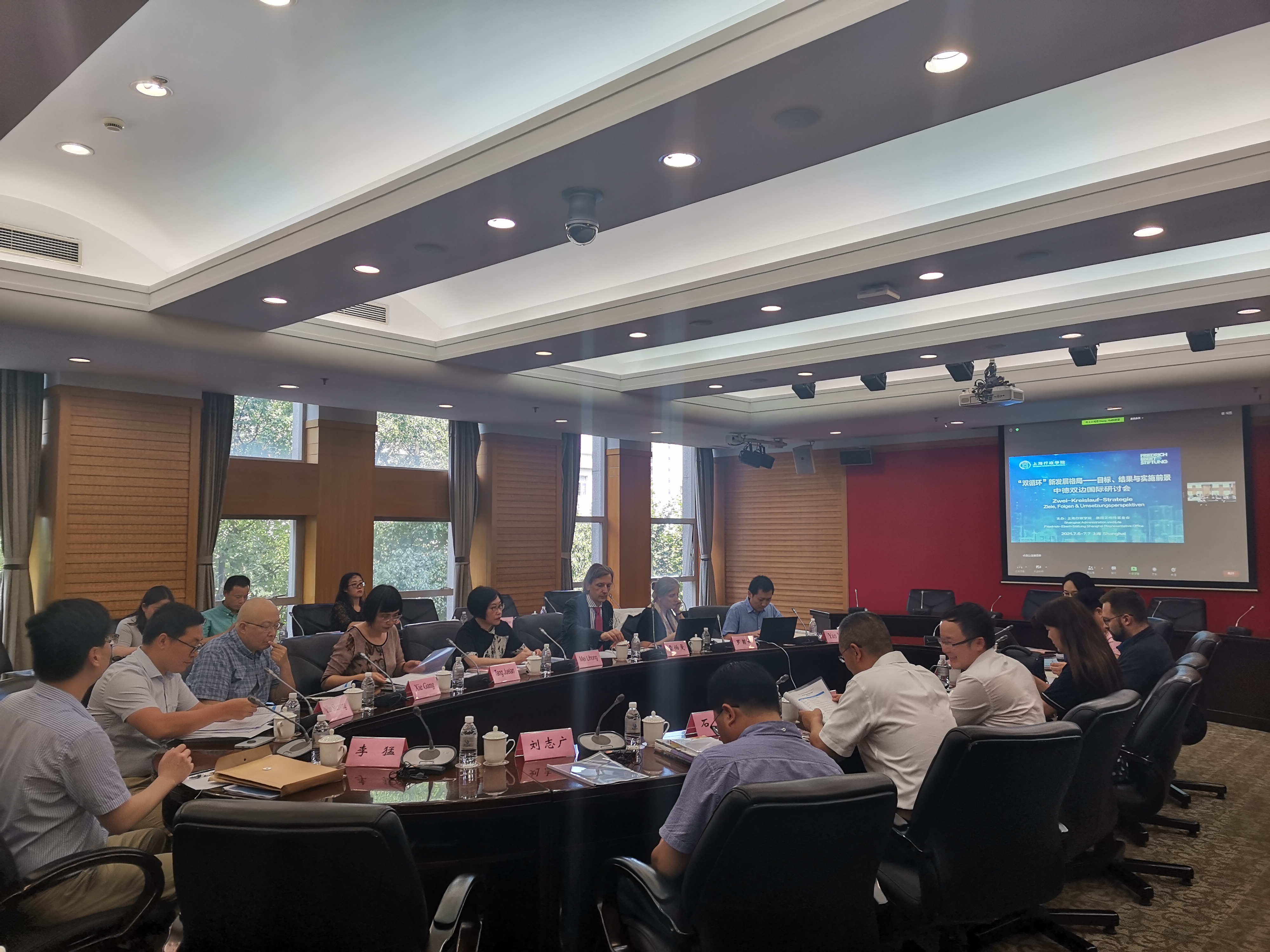
On behalf of SAI, MEI Lihong extended warm congratulations to the convening of the seminar. She pointed out that the economic and social development of all countries in the world is today in the same global community. The revolution in the global governance system and international order are accelerating. The impact of the COVID-19 pandemic has added uncertainties to the revolution. However, Chinas original intention to expand opening and promote cooperation has remained unchanged. China also remains determined to contribute to the recovery of the world economy and the promotion of a mutually beneficial and win-win global economy with vigorous actions. China is speeding up the construction of a new development paradigm of having the domestic circulation as the mainstay and the domestic and international circulations reinforcing each other. The strategy is based on the changes in Chinas development stage, development environment, and development conditions. Moreover, it has provided new opportunities for the development of other countries in the world. The new development paradigm adheres to and promotes the concepts of "the community of common destiny for all mankind", "openness and inclusiveness", and "mutual benefits and win-win prosperity". The two sides will carry out cross-border, cross-discipline and cross-industry communication, centering on such key fields as mechanisms, and modes of Sino-German cooperation under the new development paradigm, as well as how to better coordinate the mutual relationship and achieve mutual benefits. It will be of great significance for China and Germany to further consolidate the consensus on opening and cooperation, said MEI Lihong.
René Bormann expressed his appreciation to SAI. He pointed out that on the occasion of the 100th anniversary of the founding of the Communist Party of China, looking back at China and Shanghai in the past one hundred years, one can see earth-shaking changes. Under the leadership of the Communist Party of China, China has made the historic leap of raising the living standards of its people from bare subsistence to an overall level of moderate prosperity, and then ultimately to moderate prosperity in all respects. It was in this context that the Chinese leadership proposed to speed up the construction of the new development paradigm of having the domestic circulation as the mainstay and the domestic and international circulations reinforcing each other. He hoped that the dual circulation strategy could be better understood and Chinas important role in the world economy could be fully recognized through the discussion on the four themes of the seminar, which were respectively "the new development paradigm of dual circulation—goals, strategies, action demands, and sustainability", "strategies to strengthen domestic demands", "core of the structural policies and innovation policies combining social development and sustainability", and "the influence of the new development paradigm of dual circulation on global value chain and world economy".
XIE Gang, a teacher of SAIs Department of Economics and Management, made a keynote report titled Accelerating the Construction of the New Development Paradigm of Dual Circulation. A professor from the University of Duisburg-Essen and member of the Council of Experts for National Economic Development Evaluation of the German Federal Government made an online keynote report titled The Reasons and Way Out for Weak Domestic Demands in Germany, WANG Chunying, a postdoctoral fellow of SAIs Department of Economics and Management, analyzed the business patterns, existing problems, and innovative regulation suggestions for the development of the sharing economy in the context of domestic circulation. Professor Hansjörg Herr of the Berlin School of Economics and Law discussed the Influence of dual circulation strategy on global value chain and world economy. All participants had a lively discussion on the topics. And the seminar ended successfully.


 Shanghai public network filing 3101042008844.